


Insulation within the side and rear panels helps limit heat transfer.
Product specification
Climate-Controlled Wine Cabinets
Plan the bottle display alongside the insulated cabinet, glazing and access needed to ventilate and service the cooling unit.
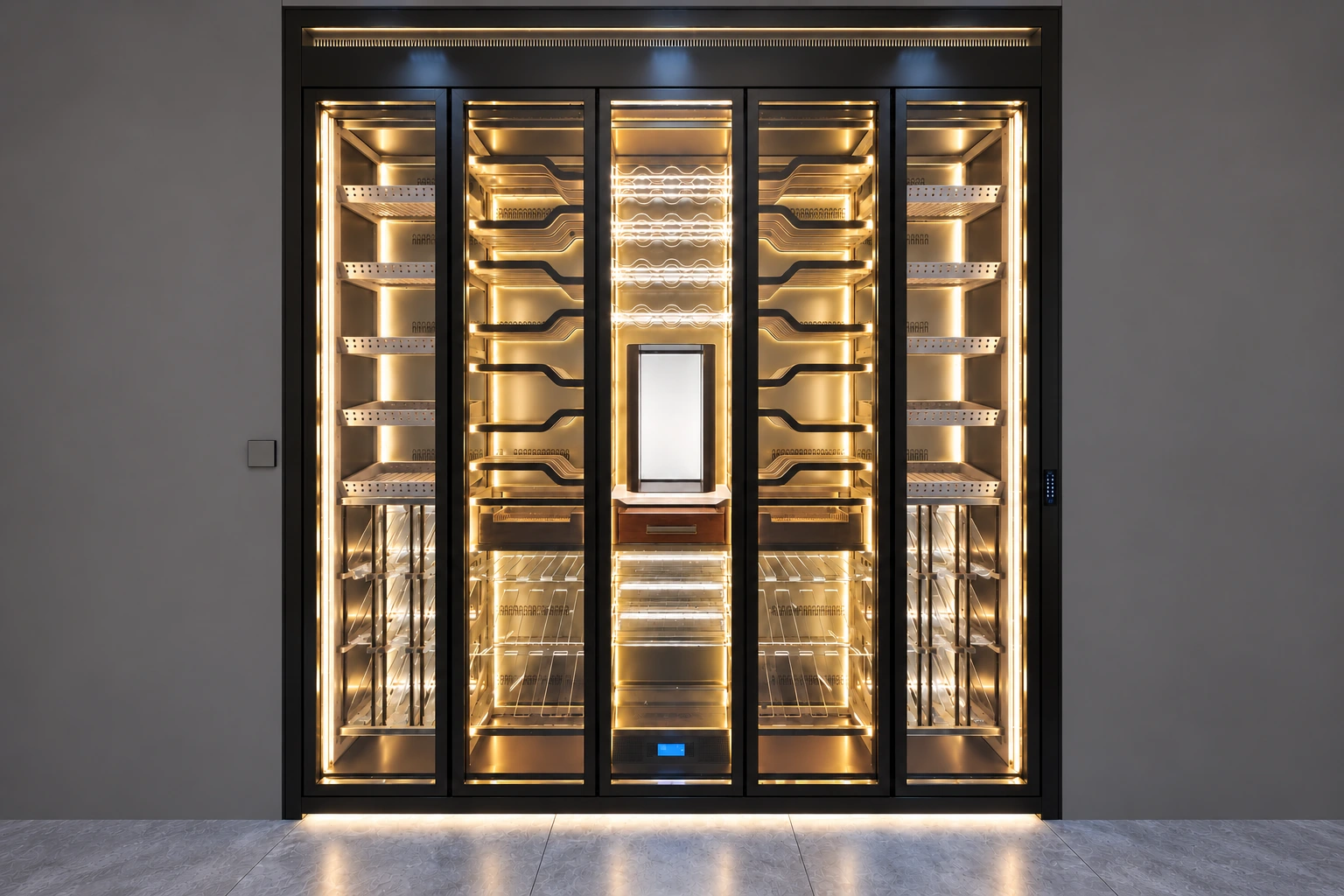
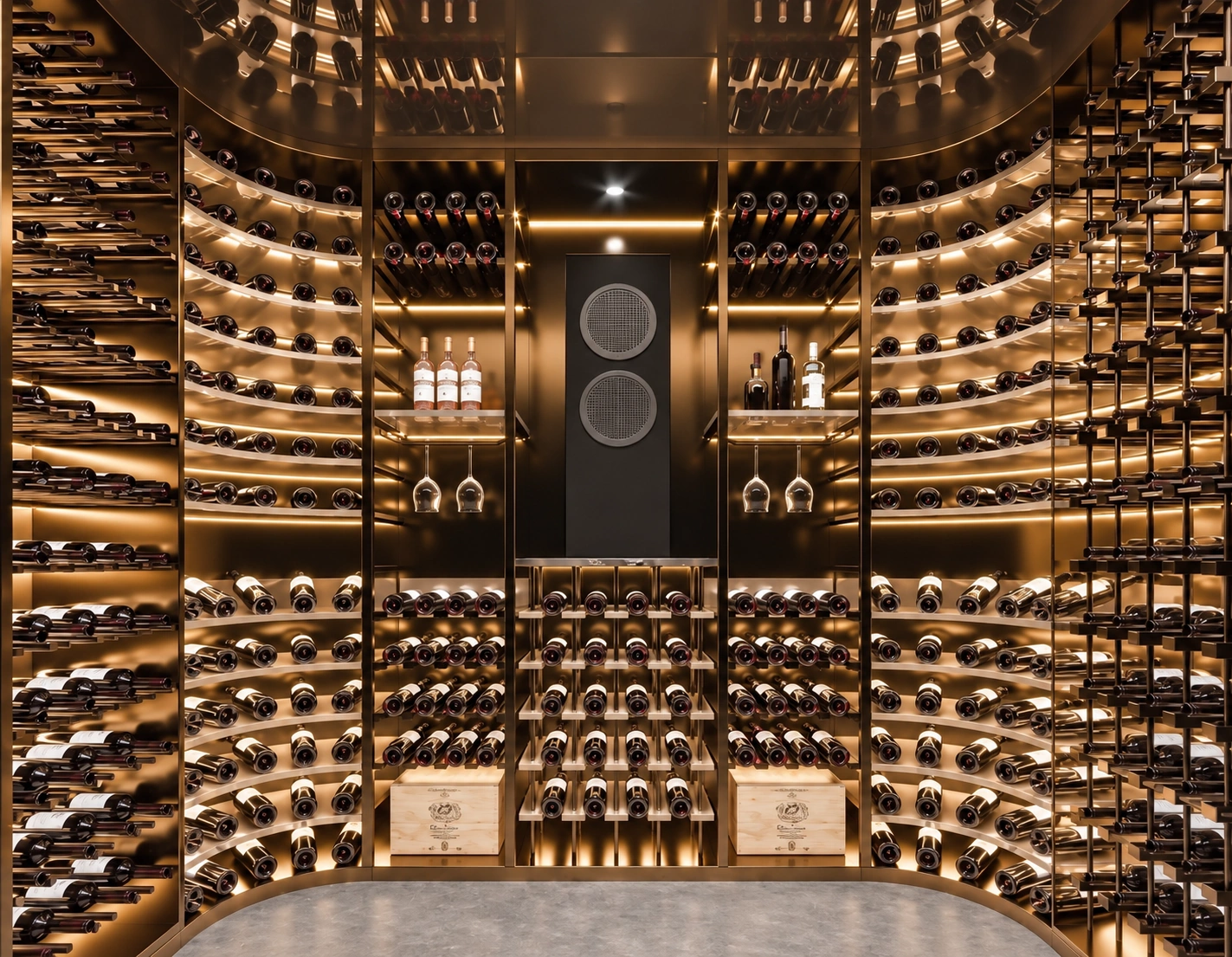
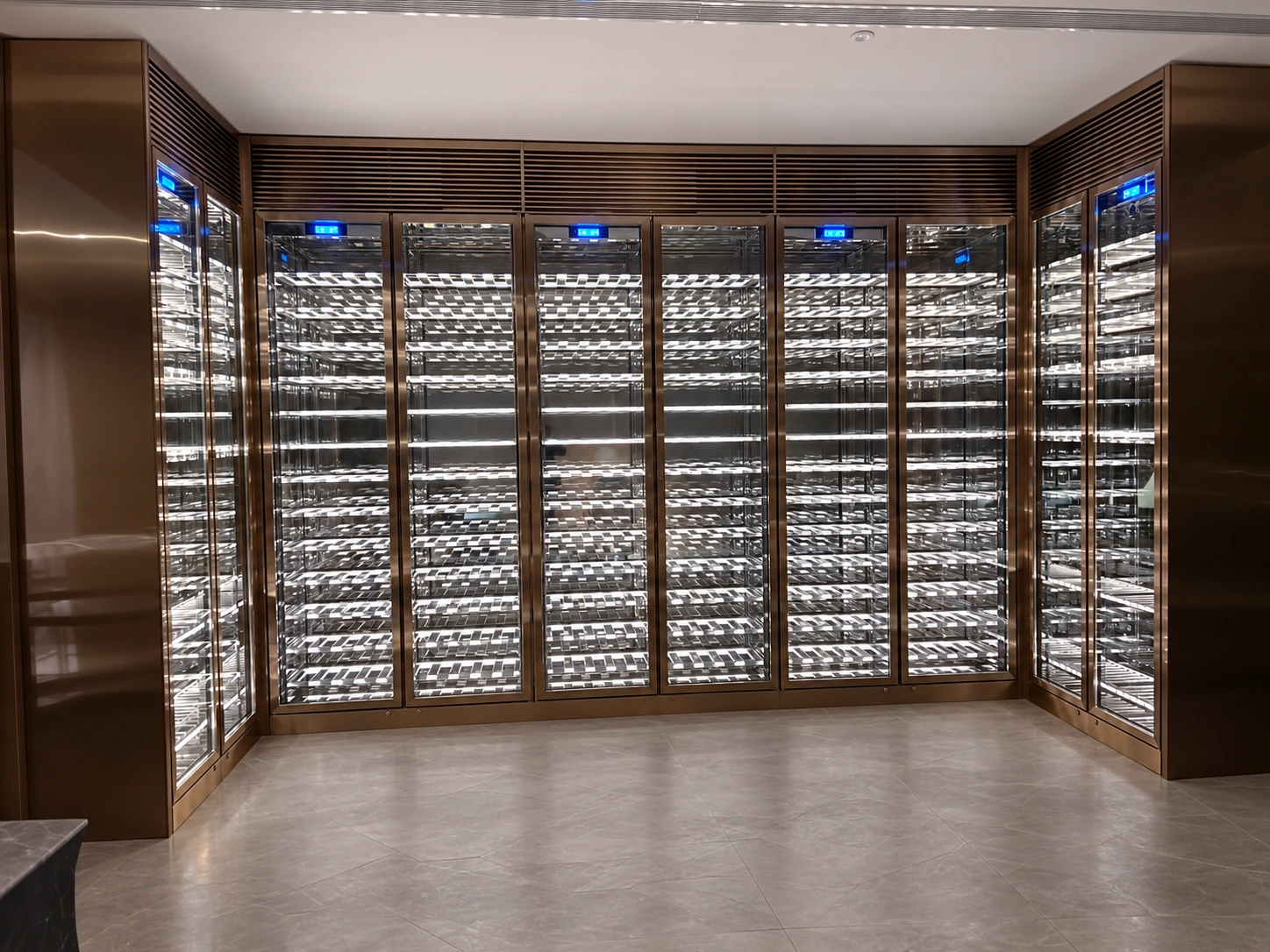 Wall-length wine display in catalogue reference C64
Made to your spaceDimensions and use, considered together
An insulated enclosureMetal craft and functional construction
Factory thermal testingInsulation performance checked before dispatch
01 / Climate-controlled construction
Detail the enclosure as well as the display
The glass and insulated body belong to the same enclosure. Mark ventilation and service access before finalizing the visible cabinet surround.
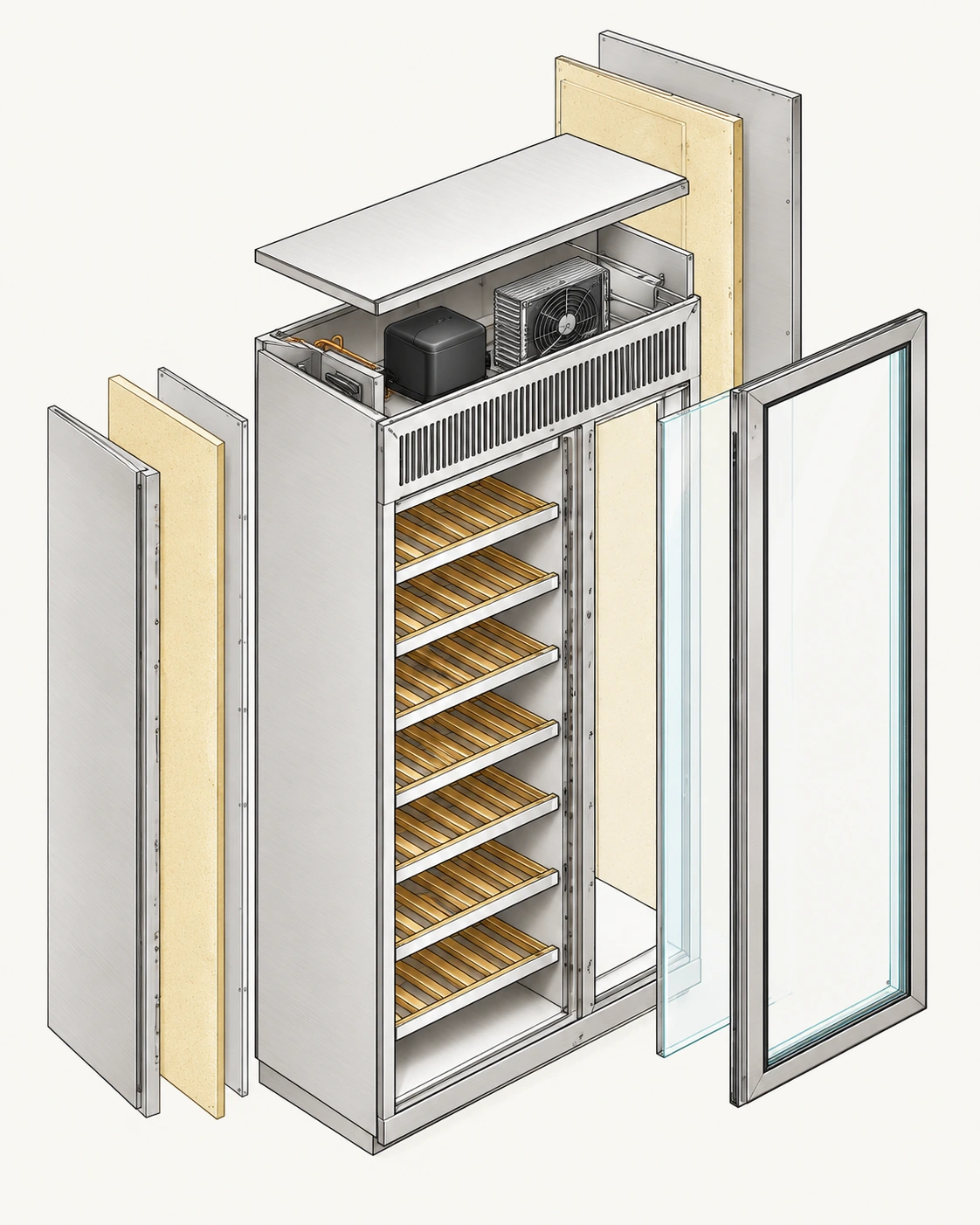
Select a detail to explore the enclosure.
A sealed glass assembly supports insulation and helps reduce condensation.
The compressor is positioned at the top, with ventilation and service access coordinated in the design.
The cabinet’s insulation performance is tested before it leaves the factory.
02 / Custom configurations
Start with the collection and the room elevation
Set the bottle layout, shelf positions and viewing height against the room plan. Then coordinate the cabinet dimensions and metal finish.
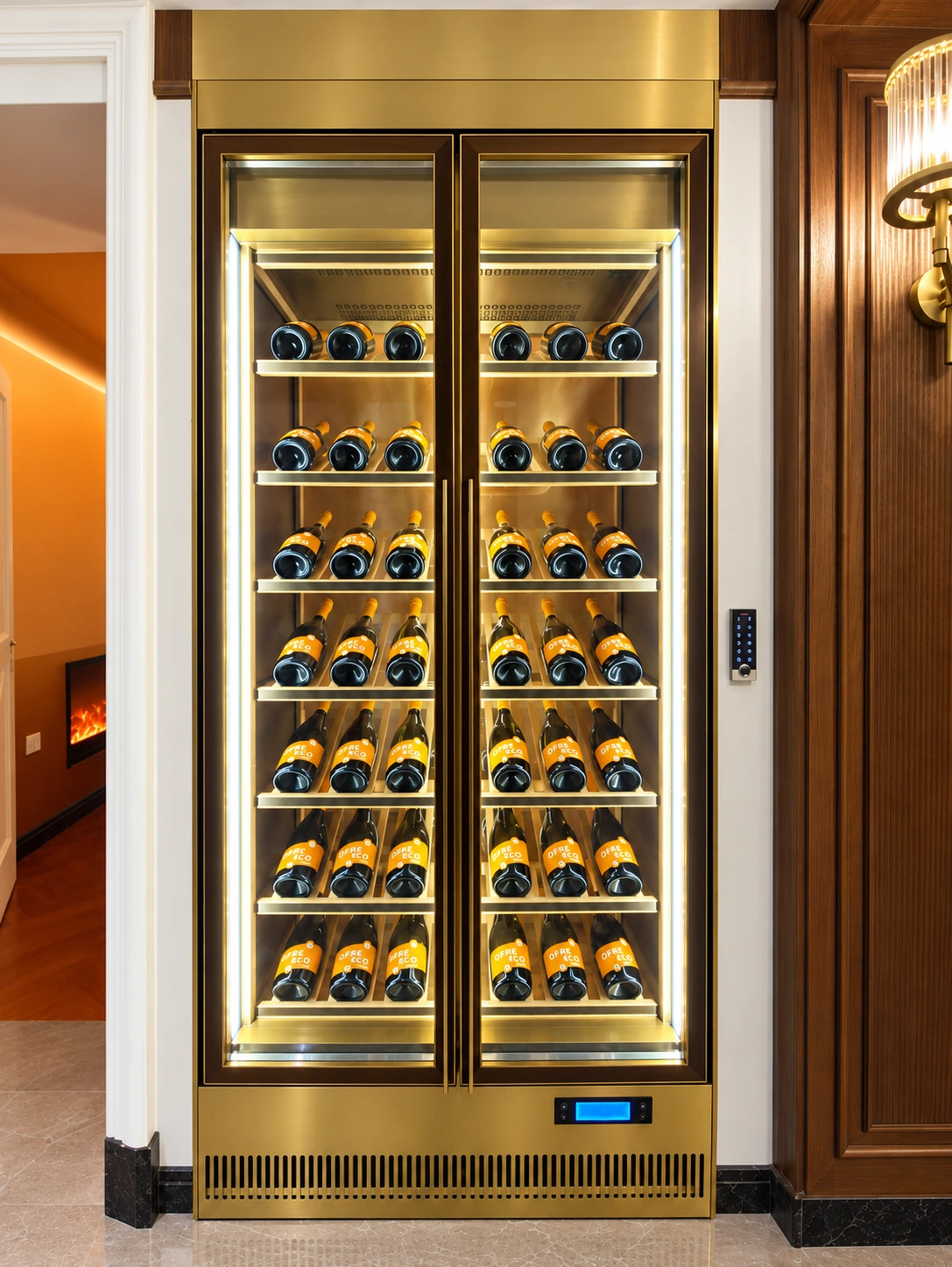
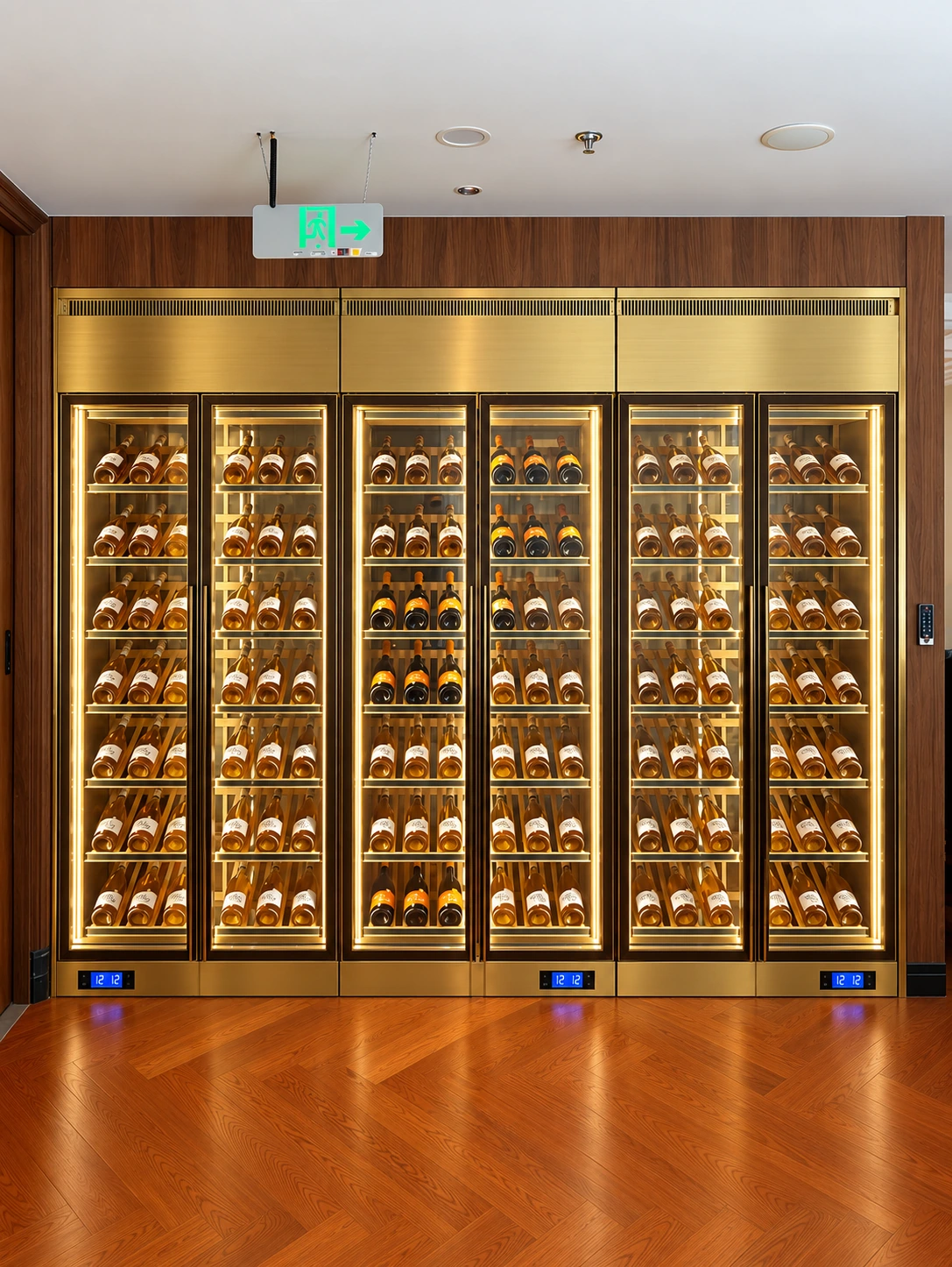
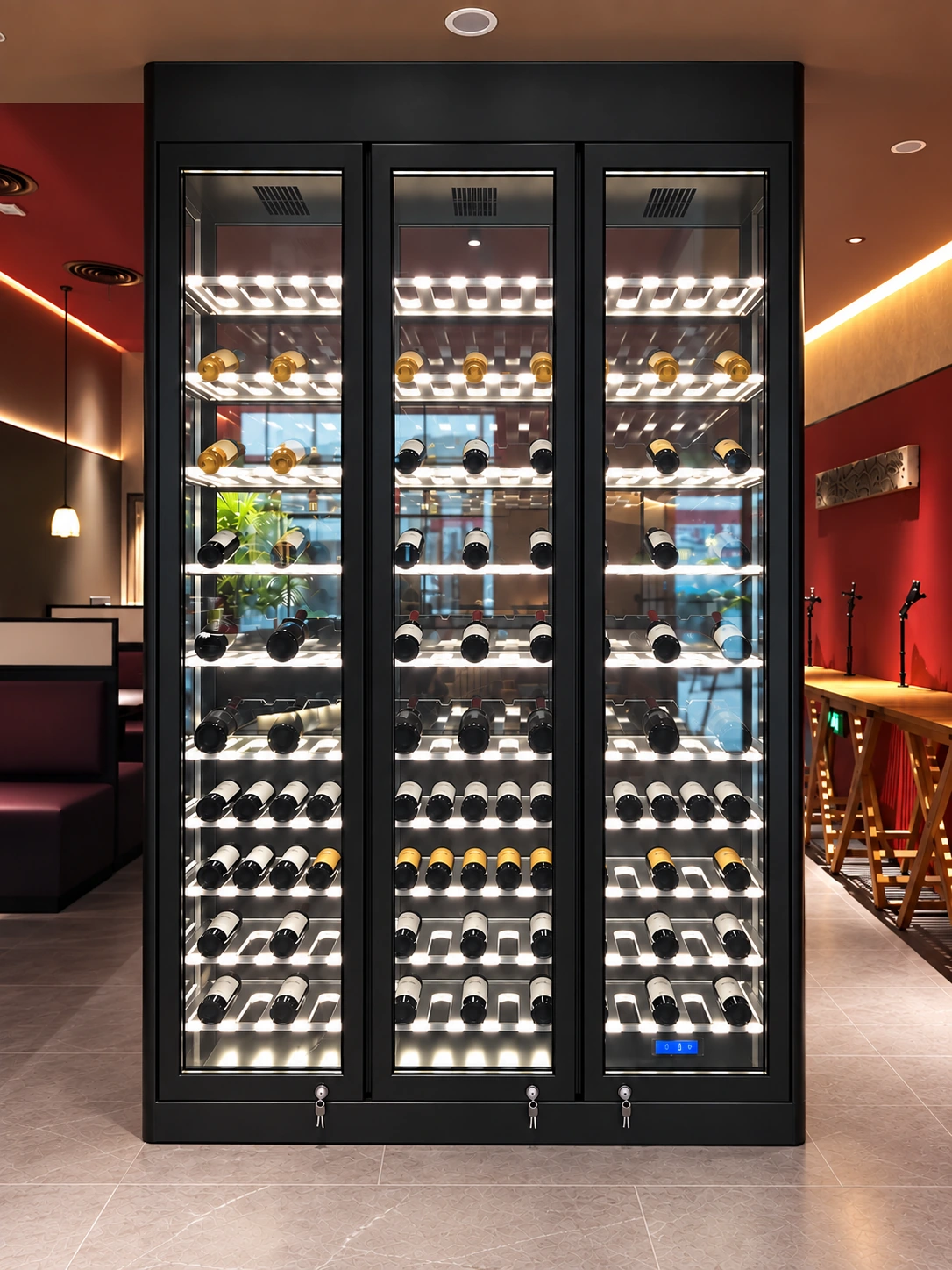
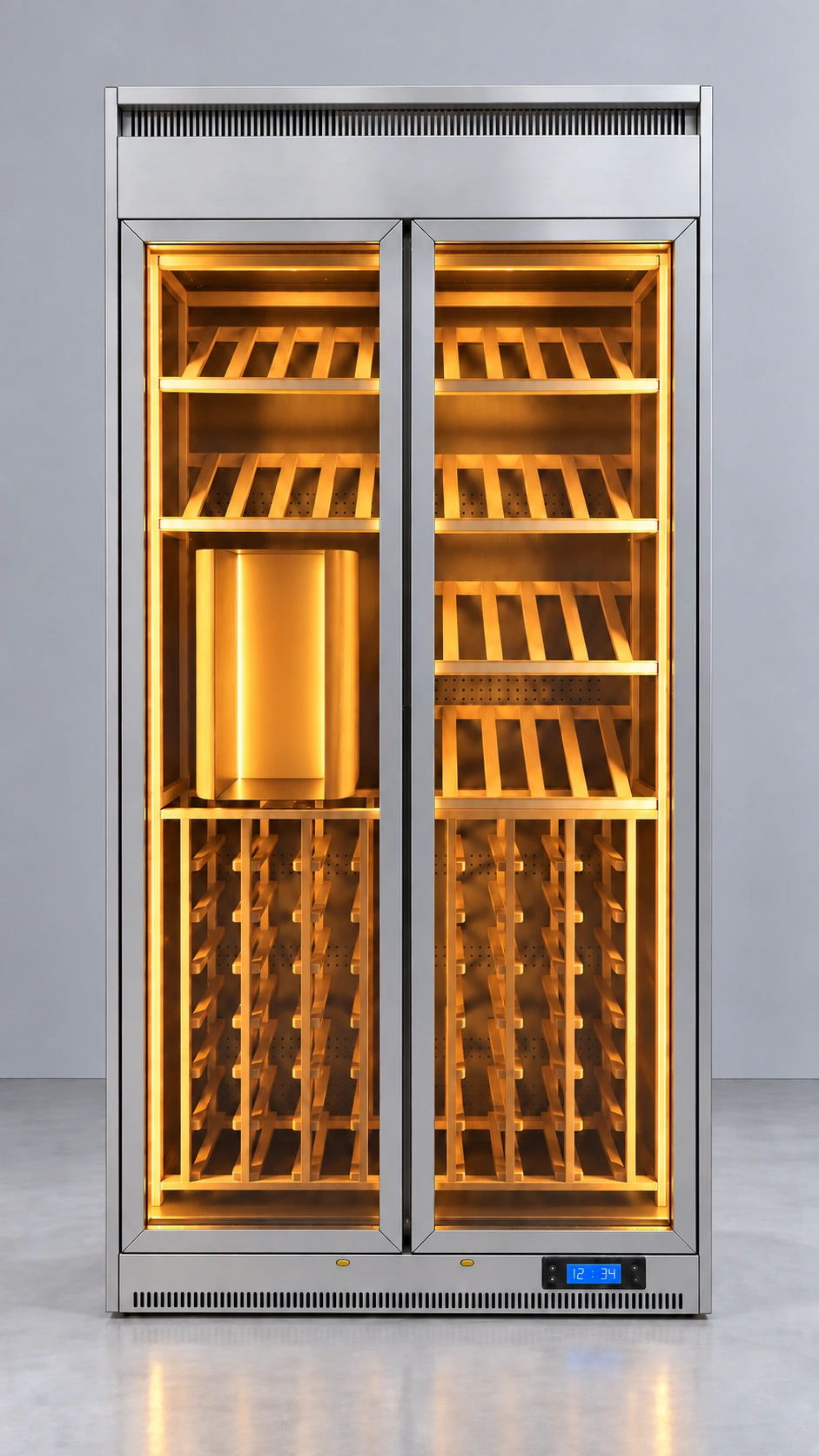
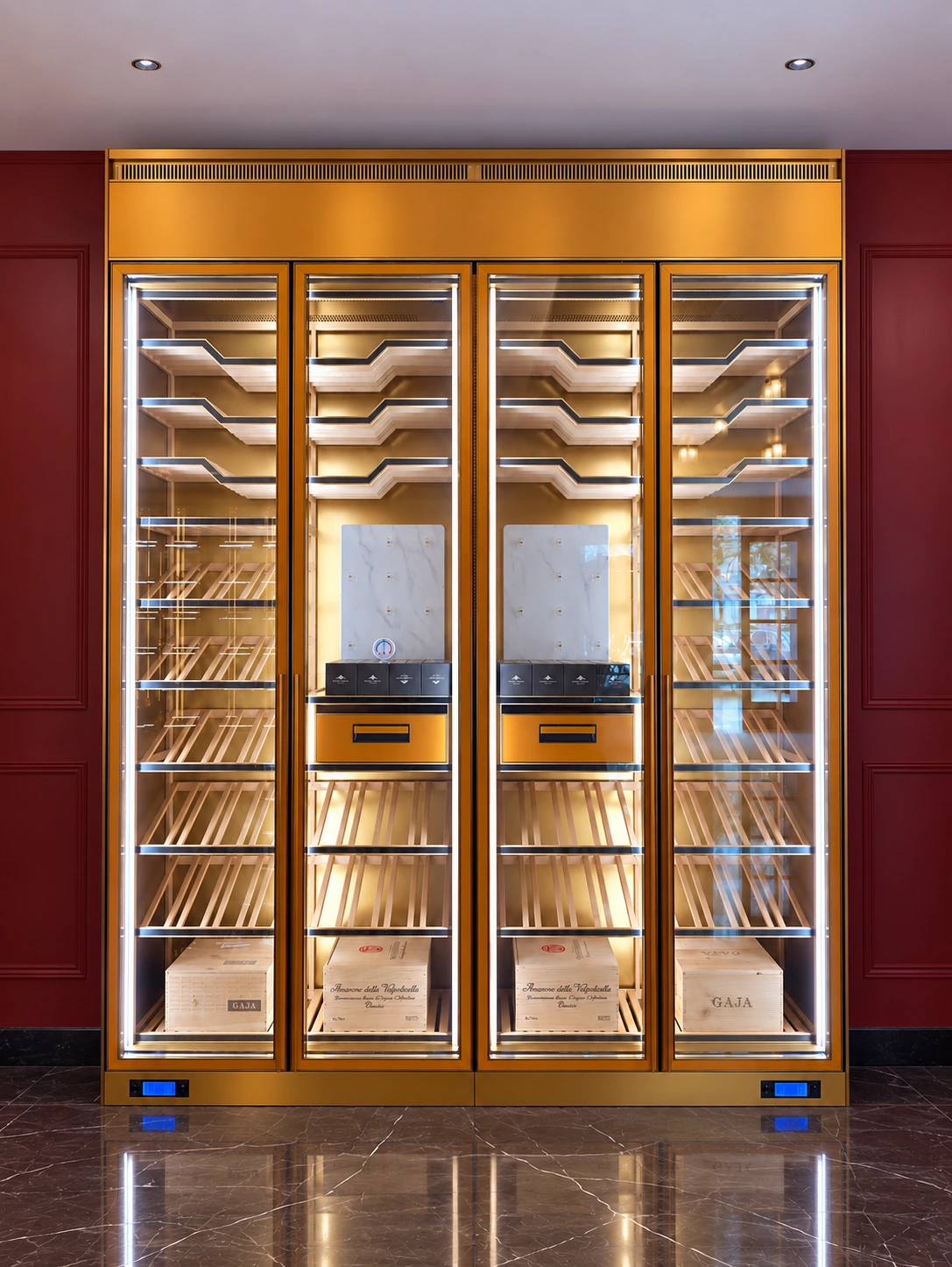
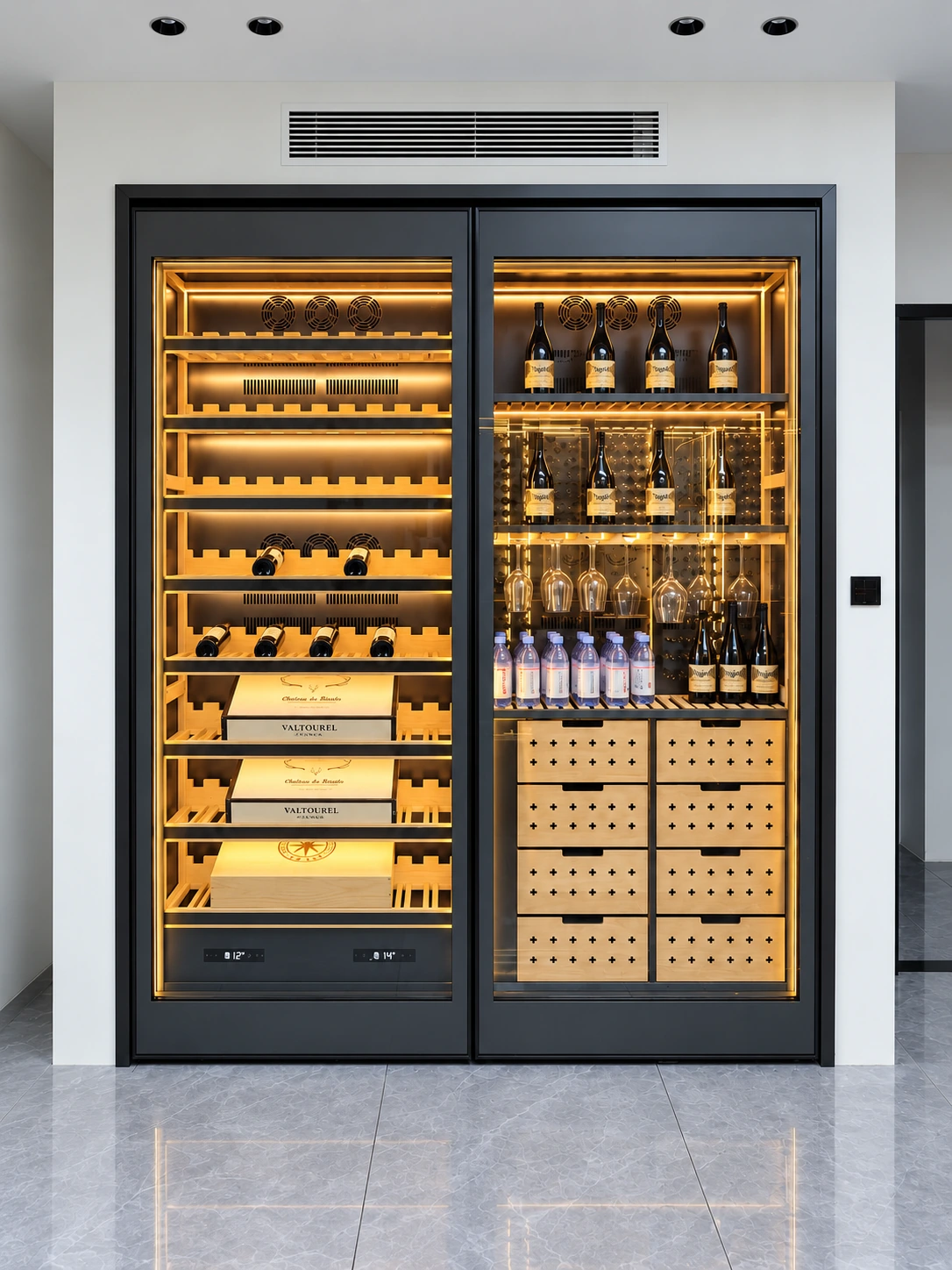
Dimensions, metal finishes, shelving and lighting are coordinated for each project.
03 / Applications
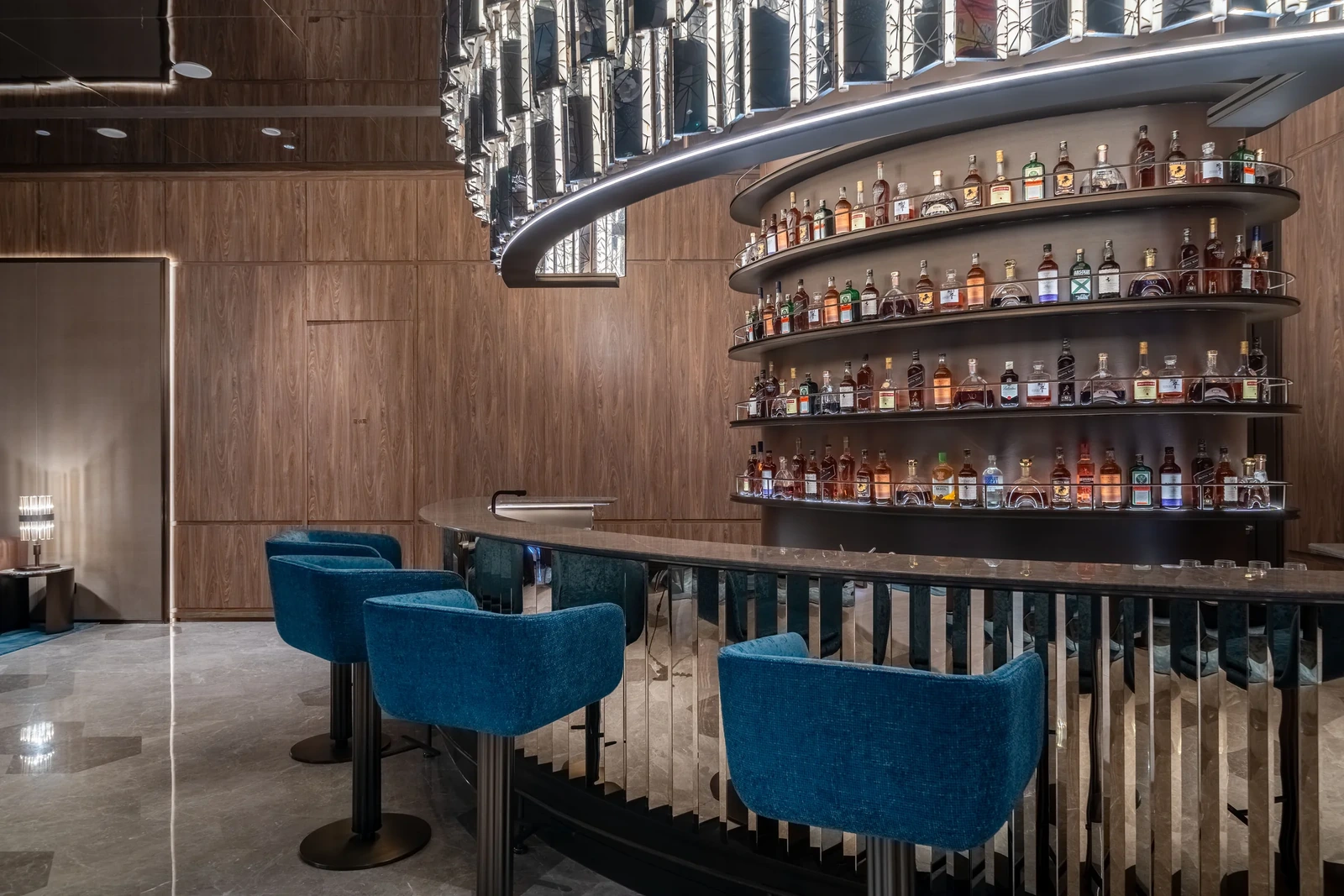
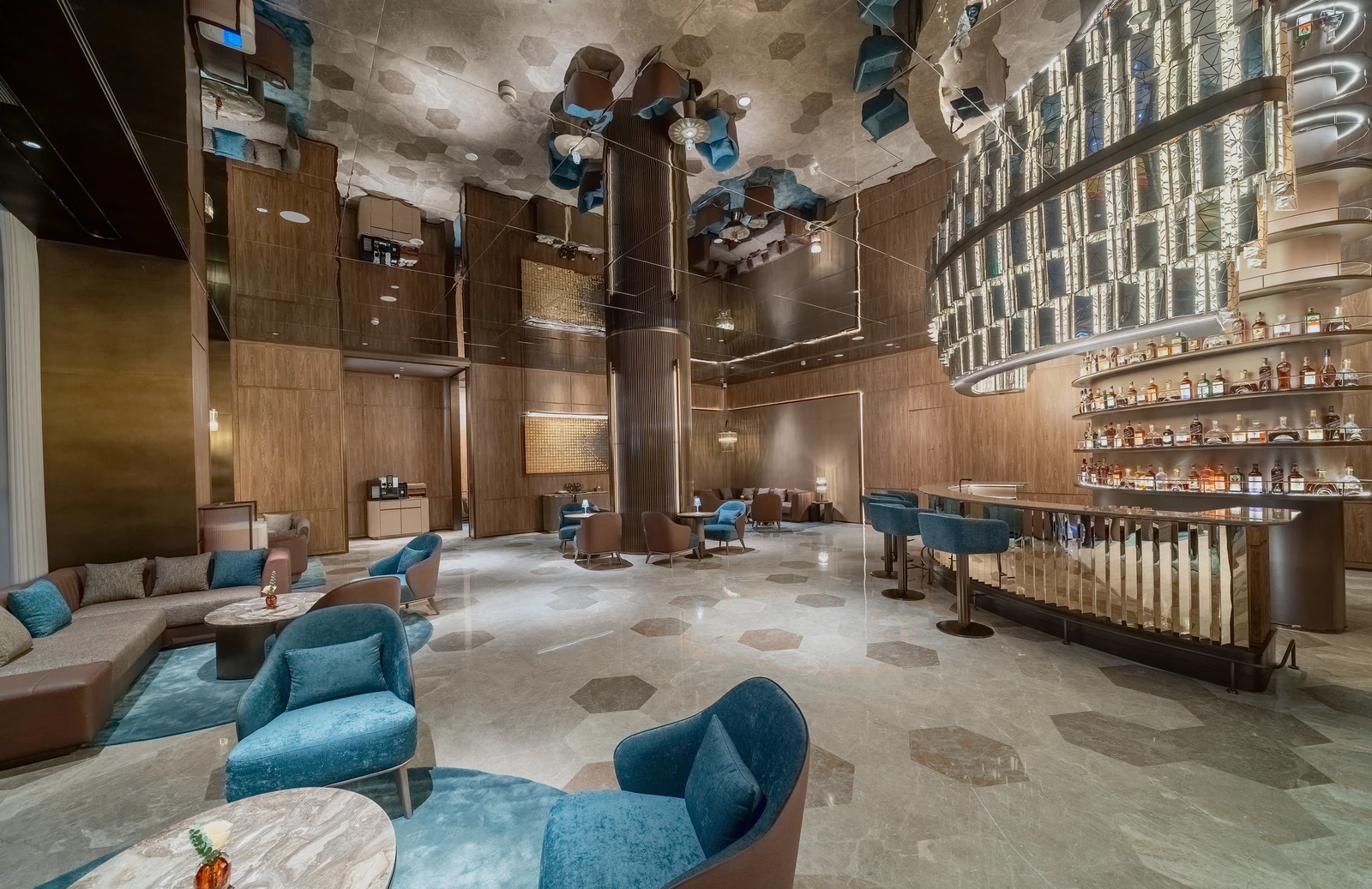
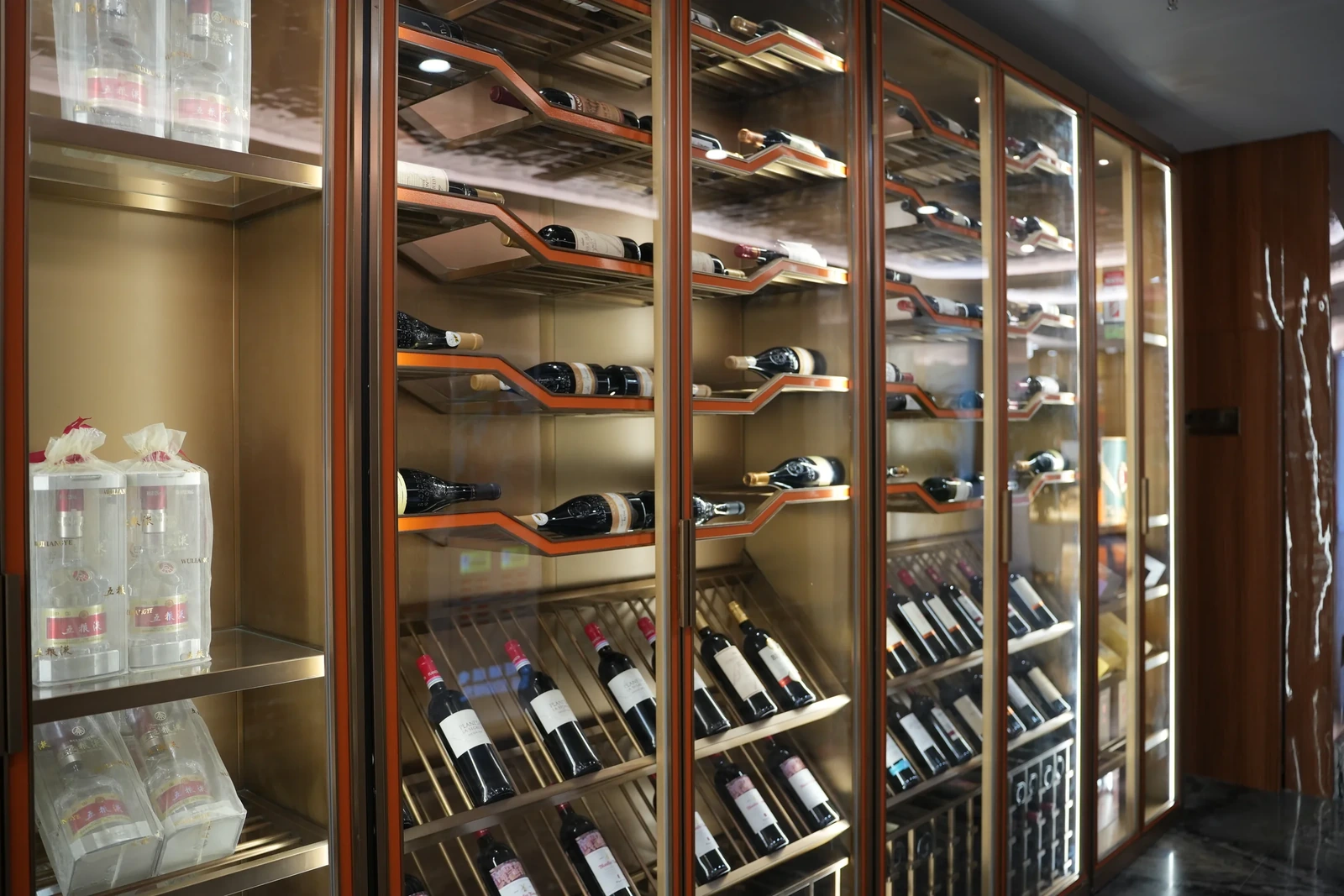
Place the cabinet in the guest’s sight line
Compare the hospitality and residential scenes for visibility, service access and the relationship to nearby seating.
04 / Temperature & configuration
Discuss storage conditions before equipment details
Define the intended collection and site conditions before agreeing the cabinet system. Temperature and service arrangements must follow the specific project.
Factory preset references
Red wine
14–16°CReference
Sake
6–10°CReference
Factory preset references. Actual settings and configuration depend on the collection and project conditions.
Also tailored for cigars and ham.
Beyond wine, dedicated storage cabinets can be developed for cigars or ham.

Wine
Shelving and a storage environment coordinated around the collection.

Cigars
A dedicated cabinet developed for cigar-storage requirements.

Ham
A dedicated cabinet developed for ham-storage requirements.
Confirm temperature, humidity, ventilation, internal layout and cleaning requirements separately for each use.
05 / Materials & finishes
Read the finish beside glass and bottles
Review a physical sample next to the glass and intended interior light so the cabinet front works with the room palette.
Material Library
Find your surface and color.
Explore stainless steel finishes and glass references. Send the material codes you prefer together with your project dimensions.
Open Material Library
Final color and texture are confirmed against physical samples.
06 / Fabrication & delivery
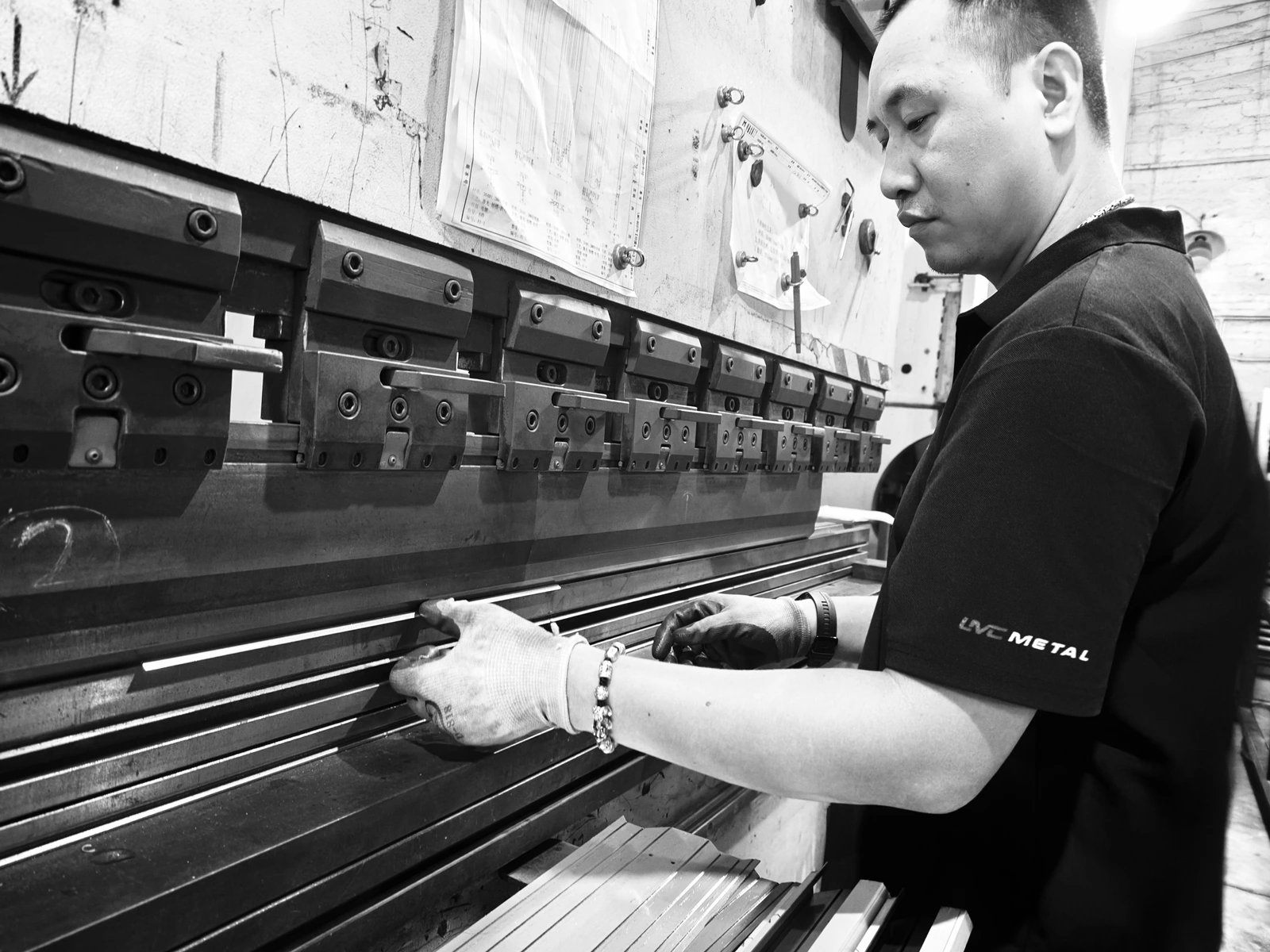
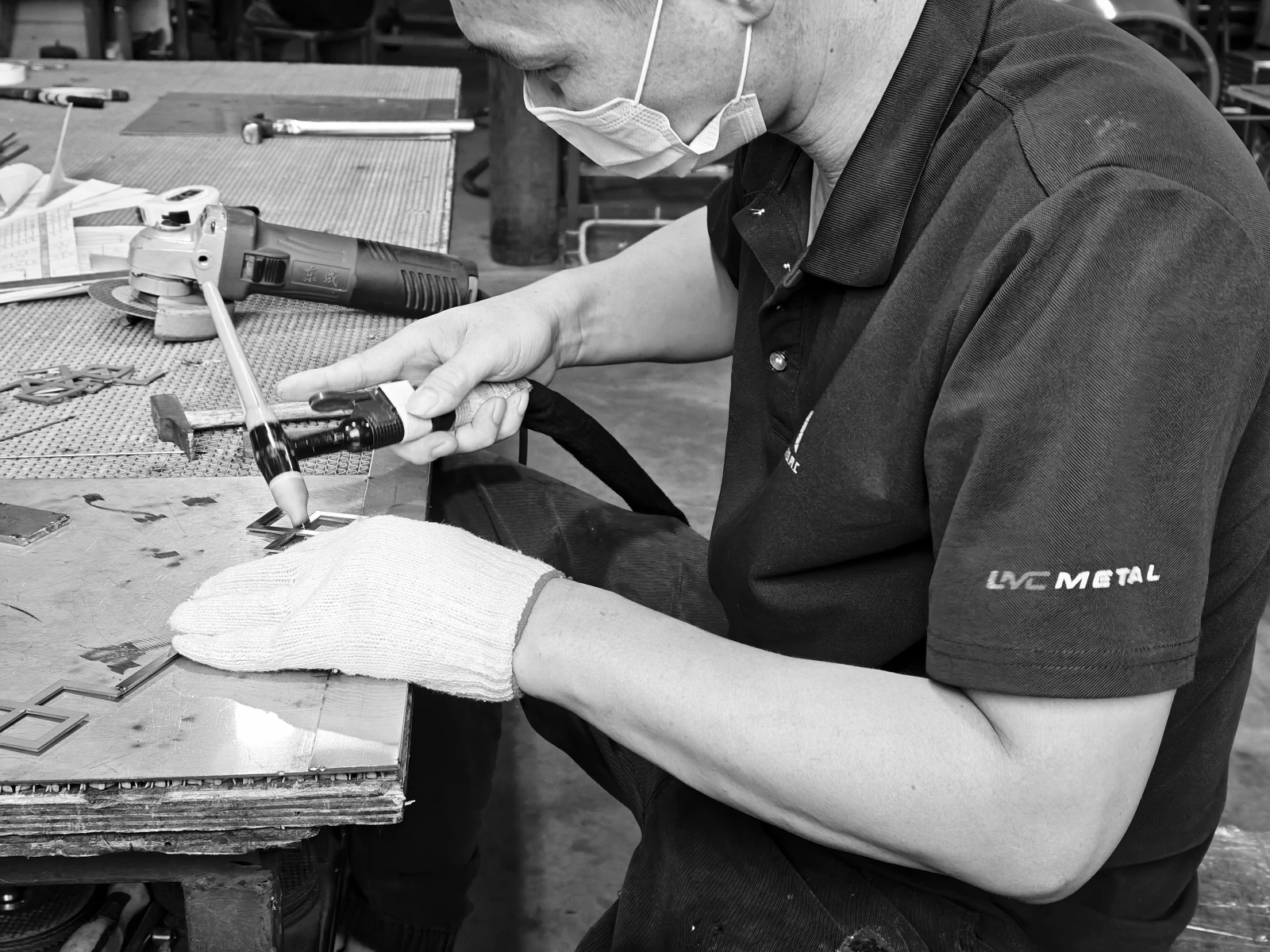
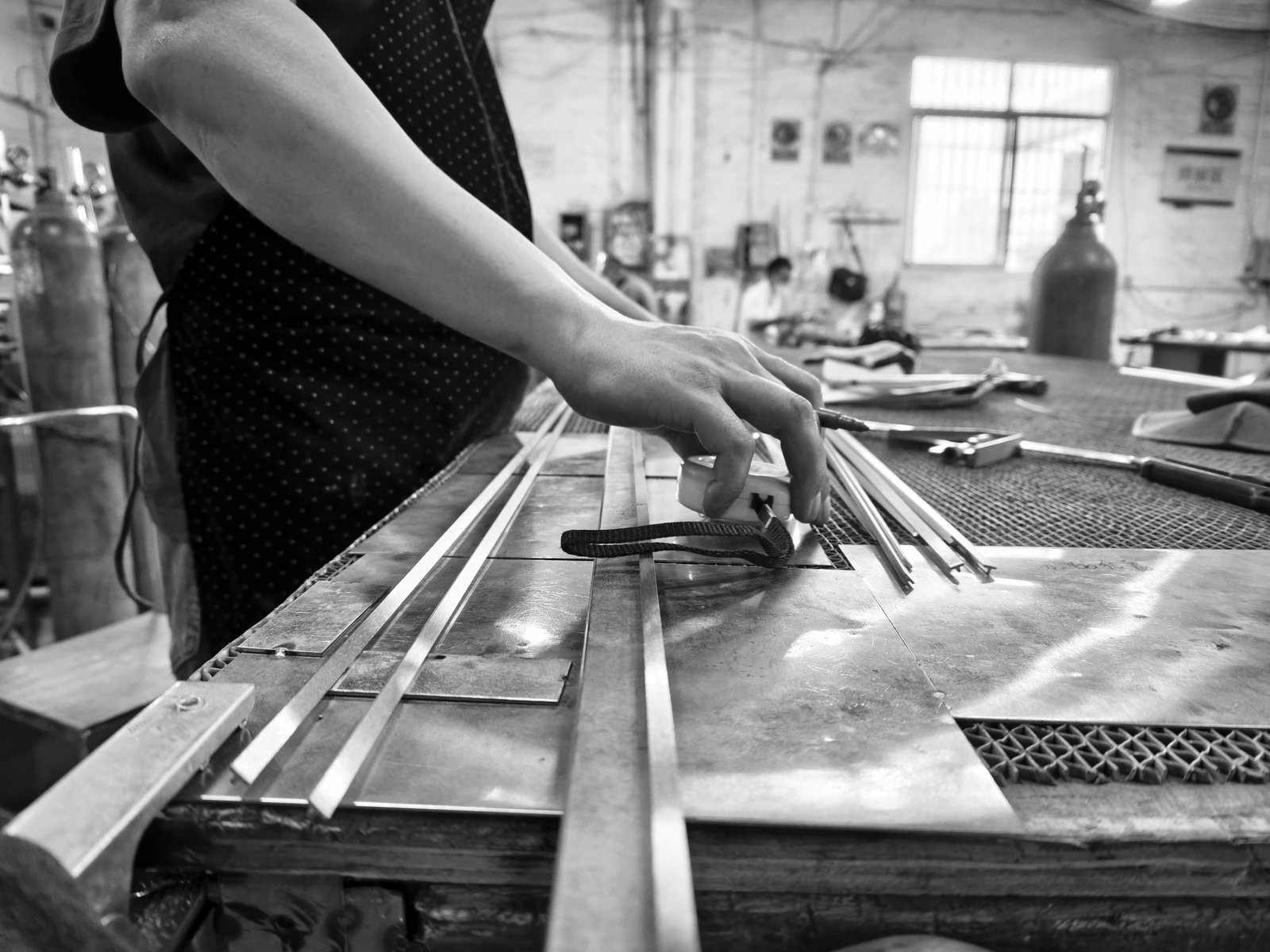
From formed metal to finished details.
LMC Deco fabrication processes
- 01Requirements & drawings
- 02Materials & system coordination
- 03Custom fabrication & testing
- 04Delivery handover
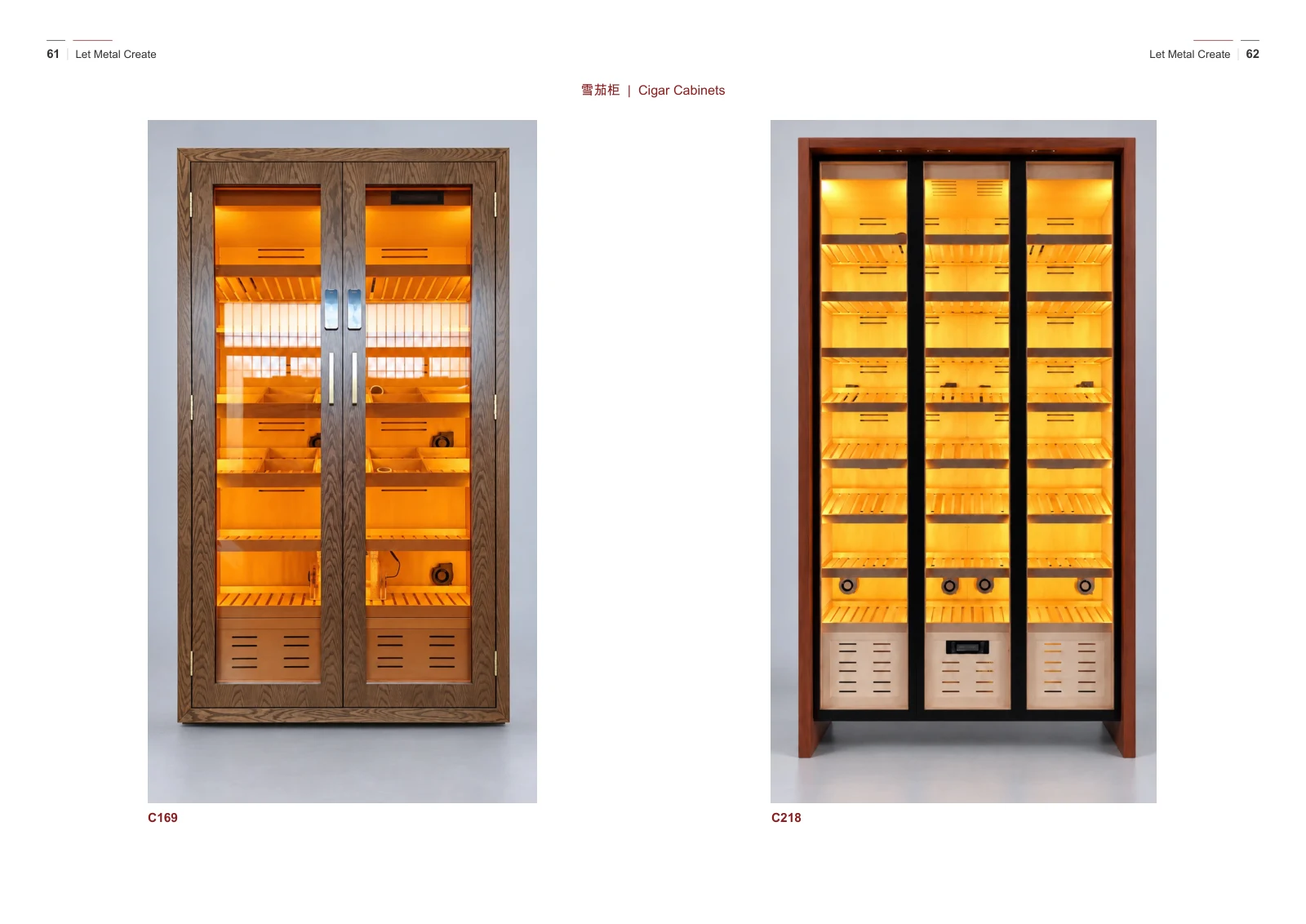
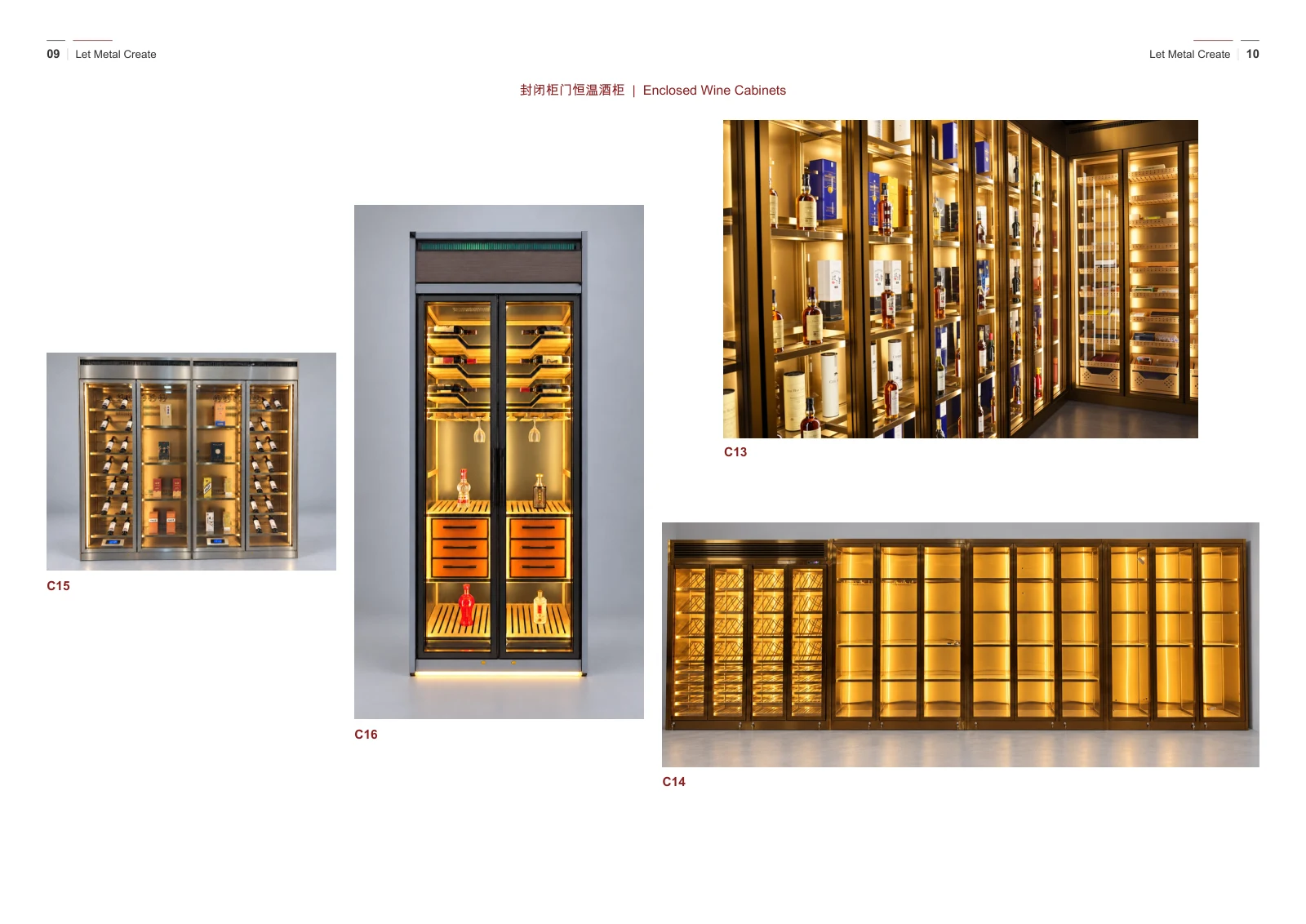
07 / Wine cabinet catalog
Start with the catalog.Find a direction for your space.
Explore display layouts and finish references, then discuss a cabinet around your dimensions and storage needs.
08 / Questions & answers
Before we begin, a few useful answers.
01How does a climate-controlled cabinet differ from open display?
A climate-controlled wine cabinet combines an enclosed cabinet, insulation and a temperature-control system. Open cabinets are mainly for presentation and everyday access.
02Does nitrogen-filled glass help reduce fogging?
Nitrogen-filled insulated glass helps reduce condensation. Performance also depends on ambient conditions, the selected temperature and how often the doors are opened.
03Can the dimensions and finishes be customized?
Yes. Cabinet dimensions, display layout, metal finishes, shelving and lighting are coordinated for the space. The final configuration is confirmed in the project drawings.
04How is the temperature range determined?
Factory preset references are 14–16°C for red wine and 6–10°C for sake. Actual settings and equipment depend on the collection, cabinet and site conditions. These references do not mean every cabinet has two temperature zones.
05What ventilation and service space should be allowed?
Top ventilation, power and maintenance access are coordinated around the top-mounted cooling unit during design development. Follow the confirmed system and installation drawings.
06What is tested before dispatch?
Insulation performance is tested before dispatch. Agree the test items and reporting requirements during the project review.
07How are cigar or ham cabinets configured?
Dedicated cabinets can be developed for each use. Confirm temperature, humidity, ventilation, internal layout and cleaning requirements separately, then coordinate the finishes with the interior.
08What should I send to start the design?
Send a plan or cabinet dimensions, intended storage use, reference photographs and preferred material codes. Include any known ventilation, power or installation conditions.
09 / Related products
Related products
10 / Start your project
Make the cabinet part of the room.
Bring your plan, cabinet dimensions and reference images. Let’s discuss the details.